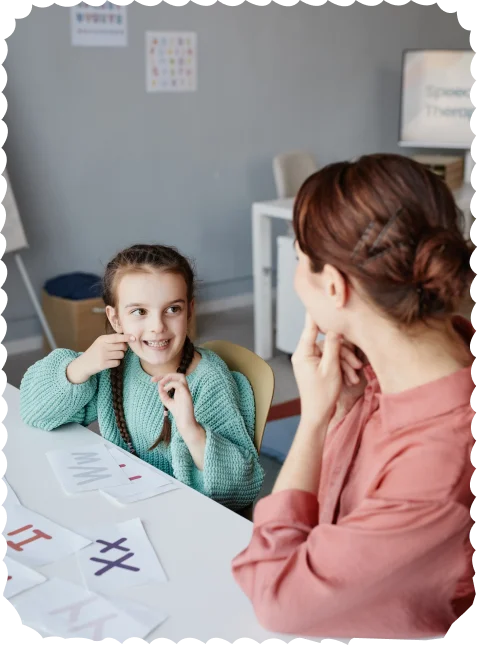
Speech-language therapy helps children improve verbal, nonverbal, and social communication skills, making everyday interactions more functional, meaningful, and effective.
Speech-language therapy addresses challenges with language and communication. It can help children improve their verbal, nonverbal, and social communication. The overall goal is to help them communicate in more useful and functional ways.
For a verbal child, Speech Therapy can improve phonemic awareness, sound/syllable manipulation, and auditory perceptual skills. Depending on the learner’s current functioning level, speech therapy can help pre-reading and literacy skills, reading comprehension, vocabulary, and writing including organizational skills, grammar, and sentence structure. Articulation delays are also addressed if they affect the learner’s ability to effectively communicate with peers and/or teachers.
For a non-verbal child, Speech Therapy can teach nonverbal skills such as signs or gestures, or learning to communicate using an alternative method (such as pictures or technology).
Some SLPs are specifically trained to address feeding and swallowing challenges in people with autism. They can evaluate the particular issue a person is dealing with and provide treatment plans for improving feeding-related challenges.
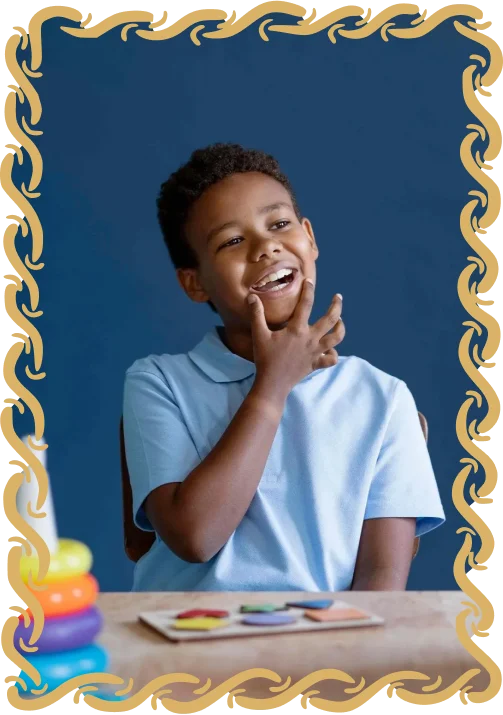

Babbles and tries to imitate sounds. Can look towards the sound of music and other sounds. Can chuckle and laugh and vocalize excitement and displeasure.

Can use a word consistently like “mama or dada” and imitate more sounds. Will start to identify basic body parts, and follow simple directions with a demonstration.

Says or imitates 8-10 words and can attend to pictures. Can shake head “no” and follow 1-step directives.

Says 15-20 words and can point to pictures in a book when named. Can use words more than gestures to communicate. Understands basic questions like “Where’s your shoe?”

Uses 50-100 different words. Can match colors and answer simple “yes/no”, “what” and “where” questions. Can count to 3 Likes to play with other children.

Starts to use complex sentences. Sentences may range in 4-8 words in length. Can count to 10 and can talk about feelings.

Says all speech sounds in words and can name letters and words. Will follow classroom directions like “Draw a circle on your paper around something you eat.” Hears and understands most of what is said in home and in school. Can keep a conversation going with another person.
Personalized therapy services supporting each child’s growth, communication, confidence, development, and lifelong independence.

Tired of waiting to get an Autism Diagnosis? Success On The Spectrum has partnered with Joshua Health to help you get an Autism Diagnostic test without the wait!

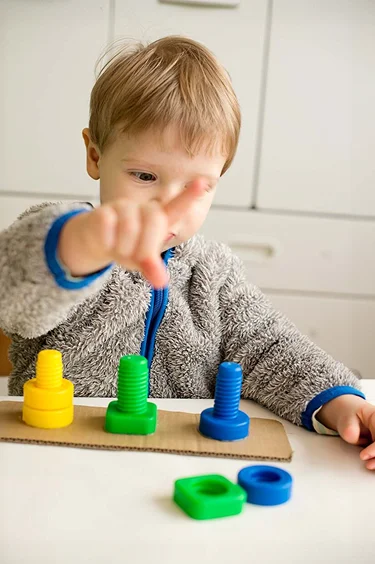
Success On The Spectrum is a national franchise that provides ABA Therapy, Speech Therapy, and Occupational Therapy to children up to age 18.
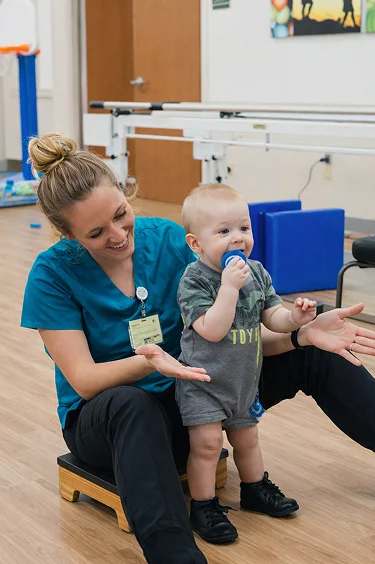
Occupational therapy (OT) helps children to become more independent and participate in a wide range of activities.
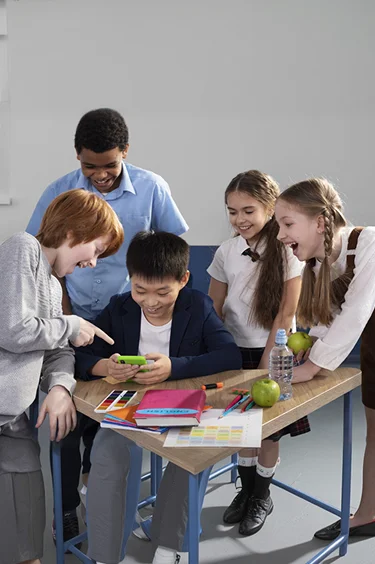
Success On The Spectrum offers group social skills classes to promote growth in social connections and friendship skill.