
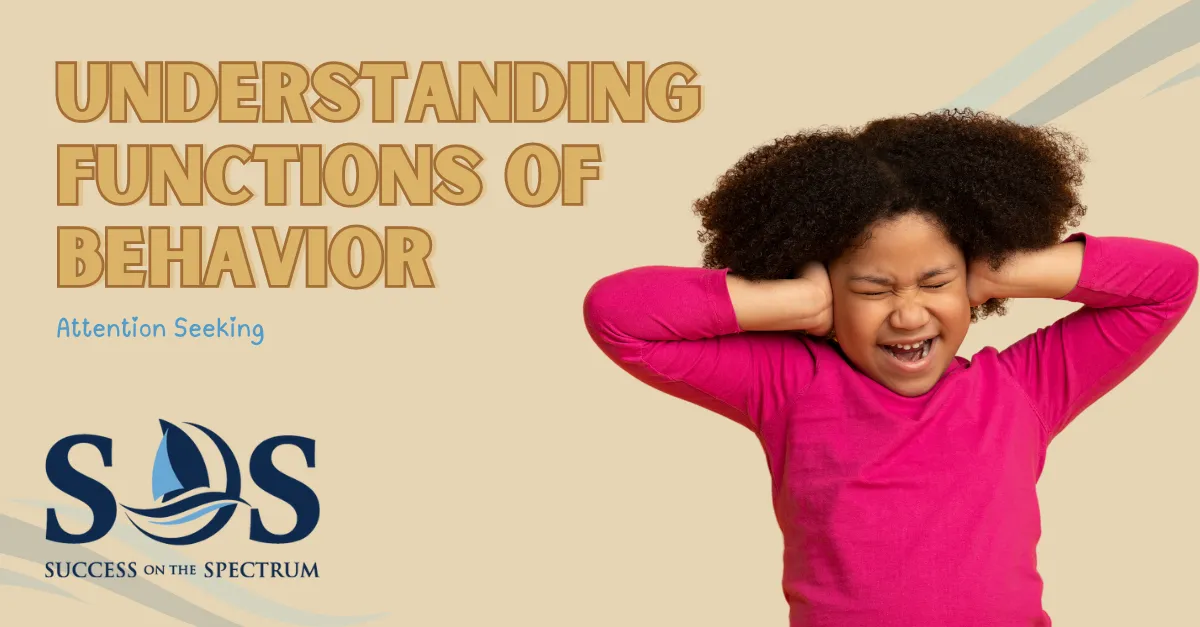
Recognizing and Responding to Attention-Seeking Behaviors

Recognizing Attention-Seeking Behaviors Children love getting attention from others, especially their parents. But let’s be honest, we do the same, especially when it comes from someone important to us, such as our bosses, closest confidantes, or significant others. However, as adults, we tend to have appropriate ways to seek attention from others, such as staying… Continue reading Recognizing and Responding to Attention-Seeking Behaviors

Compassionate ABA Therapy with Success On The Spectrum

Success On The Spectrum Featured in Medical Daily Success On The Spectrum (SOS) was recently featured in Medical Daily, highlighting its innovative and compassionate approach to ABA therapy and its impact on the autism community. As the first autism treatment franchise in the United States, SOS is dedicated to providing high-quality services and fostering a… Continue reading Compassionate ABA Therapy with Success On The Spectrum

Success On The Spectrum Expands ABA Career Pathways Nationwide

Established Career Pathways At Success On The Spectrum Success On The Spectrum (SOS), the nationwide ABA therapy franchise, has created defined ABA career pathways and is expanding its paid internship program across the U.S. As an approved practicum site for over eight universities, SOS provides employees with discounted tuition through these partnerships. This initiative aims… Continue reading Success On The Spectrum Expands ABA Career Pathways Nationwide

Functions of Behavior – Part 3

It is important to keep in mind that all of us engage in escape behaviors!
Consider, what do you do when:
– Someone invites you to an event you really don’t want to go to.
– You have had a rough week and don’t feel like going to work.

Functions of Behavior Part 2 – Self-Stimulatory

Self-stimulatory behaviors are “feel good behaviors.” These are behaviors that occur simply because it feels good to the individual or is perhaps a habit. We all engage in self-stimulatory behaviors to some extent. For example, some people twirl their hair when nervous; others might bounce their knee while sitting down. The most important component of this function is that the behavior itself is reinforcing.